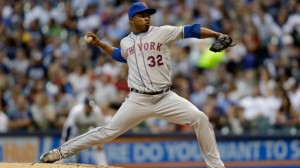
Andre Dawson and Ernie Banks are very similar


By Historical Archive ~ February 3rd, 2009. Filed under: Digest Contributors.

On base percentage, or more affectionately - OBP.

Sounds like a problem where you need a prescription to improve the condition.

It is also the primary reason that sabermetricians have continually voiced their concern over Andre Dawson’s HOF potential. According to saber heads, Dawson’s career OBP of .323 is extremely low compared to what they consider HOF caliber players.

“A walk is as good as a hit” is the new mantra. That phrase is what youth league coaches tell young kids who can’t hit the ball, those guys who bat from 9th to 12th in the lineup (don’t even get me started about the new “expanded” lineups). I guess these new 12 man lineups are progressive, similar to new open heart surgery techniques of today are better than just having a couple leeches placed on an open wound.

I’ll take a higher average hitter over a walker/strikeout guy any day, but if you can combine both a high average and a good batting eye, that is the ultimate combination. 

I read recently that Joe Posnanski* doesn’t believe that Dawson is a Hall of Famer, because despite all the superlatives of ”almost 2,800 hits, 438 homers, 314 stolen bases, eight Gold Gloves,” JoePo**can’t quite get over that .323 OBP of Dawson, who JoePo says “got on base less often than the average major leaguer of his time.”

Dawson also had way more hits, runs, RBI’s, HR’s, stolen bases, Gold Gloves, MVP’s (even though its only one), MVP second place finishes (2), All Star appearances than the average major leaguer of his time.

But, that darn OBP.

* I asterisked Joe Posnanski’s name cause he is fond of going off in a tangent about other things relating to the subject that basically just come to mind for him. Posnanski writes for the Kansas City Star, came through Cincinnati, but began his career in Charlotte. He is witty and intelligent and many of his pieces are really good. Like the one he wrote last August about Greg Maddux and the greatest game he ever pitched, which was on July 2, 1997. It was great game because Maddux did mow down the Yankees that day in quick fashion, winning 4-0, getting some revenge against the team which beat him in Game 6 of the 1996 World Series the prior season.  

PLUS, I WAS THERE.

That Maddux game was played in a Randy Jones like 2:09. I remember going to use the facilities during the middle of the game, waited in a moderate line, got another round of refreshments, came back to the seat and two complete innings had been played! And it was the only major league game I attended with, at the time, my future ex-wife. That game has meaning to me!

**JoePo refers to the revered, cult-like status that Posnanski is regarded in the sabermetric (and blog) world. His blog www.joeposnanski.comis linked to practically every baseball website (except nybaseballdigest.com) and he is known as the mainstream thinker for the saber movement. Along with Rob Neyer and Keith Law, JoePo is the guy who saber heads go to for info – and to read that Dawson and Jim Rice shouldn’t be HOFers. JoePo is a knockoff of the JoePa nickname given to another icon named Joe P. – Joe Paterno, head football coach at Penn State.

Anyway…back to me. Of course, getting on base is important. You need to get on base in order to score runs, and then you need other players to get hits and/or put the ball in play to drive those baserunners home. Players who are faster get around the bases easier, and that speed is utilized even more when guys behind you hit the ball for extra bases. That is why the fast guys are usually placed in the top of the lineup in front of the power hitters. Been that way for ages until Casey Stengel used to tinker with leading off sluggers Hank Bauer and Gene Woodling for some of those 1950′s Yankee teams.

I like power in the lead off spot, too. Nothing like getting that quick 1-0 lead, a la Rickey Henderson.

Baseball is a team game, but it is the most individualistic team game of all time. There is nowhere to hide. All eyes are on the ball, and people notice everything you do as a player on the field because you are involved when the ball is hit or pitched or thrown to or by you.

It is the only team sport where you play the ball on defense*** and don’t have to defend against another player. When the ball is hit to you, all eyes are on you, and you are expected to make every play. It’s not like you are a lock down cornerback in football and no one notices you are doing your job extremely well because the ball never gets thrown in your direction. Or if you are Michael Cooper of those 1980′s LA Lakers who played defense so well that it never appeared the guy he guarded was actually playing!

The worst job in baseball is the defensive replacement. You are in there for one thing – play good D! If you make an error, the vultures (media and impatient fans) begin circling.

***There is an old baseball proverb that you can not hide a weak defensive player. The ball is like a magnet and the bad defensive player has a huge metal belt buckle on. The ball will always find the weak glove. One time when coaching in high school, there was a really good hitter on our team who was like Dick Stuart with the glove. We already had a guy at DH, because his defense was even worse!

Anyway, I started him at first base where he made two errors, then moved him to right field where he made another error, costing us a run. He was moved in a switch to left field for the last inning when the other team had a couple lefties coming up. First lefty gets on base, and with one out, the second lefty hits a easily catchable fly ball to left, which is butchered by our “left fielder.”

Back to offense. In the 1970′s and earlier most lineups had fast guys a the top (the table setters), power guys, then a usually really crappy bottom of the lineup. Few, if any, teams had stacked lineups. Maybe the 1953 Brooklyn Dodgers, the 1936 Yankees or maybe even the 1975 Reds.

Meanwhile, today’s game is pushed to be on base happy throughout the lineup. Not to understate the obvious, but that is good. Real good. More guys get on base, then more guys get to score runs, and more runs in a game usually equals more wins, and so on and so on.

Isn’t that the way Jack Morris won all those games? His teams scored more runs than the team allowed.

As Posnanski pointed out in this piece I agree that it probably is not fair to compare players of different eras to each other. In HOF voting, I would compare players on the ballot with similar player of his generation rather than compare an Andre Dawson or Jim Rice against Hank Aaron and Willie Mays.

In the past, the guys at the top of the lineup were supposed to get on base, guys in the middle were supposed to drive them in, and if the bottom couple hitters created any scoring, it was like playing with house money. Now, the bottom of the lineup is supposed to each have an OPS+ of .900 or better or they are shipped out of town. Well, at least here in New York.***

*** On July 29, 1996, the New York Mets traded Jeff Kent to the Cleveland Indians for Carlos Baerga. For the next nine years after that trade, Kent went on to post OPS+ of 105 through 162, eight seasons of 100+ RBI’s (the other year he plated 93 runners), an MVP and three other top 10 finishes. Lack of patience with Kent’s fielding and temperament forced the trade with Cleveland. The Yankees might do the same thing with Robinson Cano, but they shouldn’t repeat the mistake the Mets made with Kent.

The game is different today, and I believe many players are only more interested in padding their OBP stats rather than actually winning games – see Adam Dunn.

So, if OBP is the end all for HOF enshrinment, I bet Brooks Robinson, with his paltry .322 OBP is happy he wasn’t playing the bulk of his career during Dawson’s and Rice’s time, when judging players is more detailed. Brooks doesn’t even rank in the top 1000 in career OBP according to baseball-reference.com****

**** I wonder if B-R.com will eventually go public as a company? With more and more pages available each year to be “sponsored,” there could be an endless stream of dollars entering their coffers, and with more and more saber guys plus myself, checking the site for research purposes, if they started charging a user fee…

But, Brooksie has those 16 Gold Gloves and 1964 MVP to his credit, plus four other top 4 MVP finishes. Wait, Dawson has 8 Gold Gloves and the 1987 MVP, plus two other second place finishes. Hmmmm….

No way that Robinson is not a Hall of Famer. He is also in the good guy Hall of Fame, too. I used to go to those old baseball card shows***, the ones in the late 1970′s and early 1980′s where players used to sign for free, or in the case of Bob Feller used to charge a dollar. Robinson was always interested in talking baseball, and I still have that 1965 Topps signed card.

***I still buy and sell old baseball cards, mostly pre 1970 Topps, Bowman, Goudey, Playball, old tobacco cards, etc. So, if anyone has any old cards they would like to have appraised and eventually sell, email me.

When looking at baseball-reference.com I noticed that one of the top ”similar batters” for Andre Dawson was Mr. Cub, Ernie Banks. He was right there with Billy Williams, Tony Perez, Al Kaline, Dave Winfield and Gary Sheffield, all HOFers or in Sheff’s case, likely HOFers.

I began to check out the respective stats of Ernie Banks. First thing I noticed was that his career OBP was a pedestrian .330. Uh-oh, wait a “Let’s play two!” minute here. As with Robinson, lucky for Banks, his HOF voting came up in 1977 and not in 2007. Despite over 500 homers, he might not be looked at as a HOFer because his OBP is very low.

However, Banks dominated his era – one of the qualities I believe is very important.

Banks had a great eight year run from 1955 through 1962, the year he made his full time move to first base. During this time period Banks averaged just under 40 homers, 110 RBI’s with a 140 OPS+. A great prime time, especially when you consider he was a shortstop for seven of those years.

Banks’ career OBP of .330 really bugs me, though. 

In a piece he wrote a month ago JoePo said, “I have thought about (the player) about as much as I’ve thought about anyone on the ballot … and at times I have thought, “You know, he was so good in so many areas, and he was a class guy and a leader, maybe I should …”

… and, I still have not been able to pull the trigger. And here is why: Because on-base percentage is just so much bigger than so many people seem to realize. On-base percentage is not some convoluted modern statistic. On-base percentage is not something new … it goes back to the time before Cobb. On-base percentage is not even about walks. On-base percentage is simply the core of baseball, the very heart of it since the first ball hit the first stick.”  

Not about walks? Don’t tell that to Adam Dunn, Jason Giambi or Baseball Prospectus’ Joe Sheehan.

Again, those weren’t my words, those were the revered JoePo’s, and it wasn’t about Banks, but was written a month ago about Dawson. But, if having a decent OBP for a run producing slugger is a requirement for the HOF, then JoePo’s words would be appropriate for Banks, too.

JoePo also says that if only Dawson had gotten more hits, his OBP would have been higher. Dawson did have more hits than Banks, both his prime and through the entire career. The only difference was their walk totals - so it has to be ABOUT THE WALKS.

If OBP is so important that HOF status can ride on this one stat, maybe there should be a magic number that equates to automatic enshrinement, similar to 300 wins or 3000 hits? Can’t be the magic .400 OBP because then guys like Max Bishop and Ferris Fain (both former Philadelphia A’s) would be automatic HOFers. Can’t be .450 because so few players attain that lofty mark. Maybe a minimum OBP? How about .350? But, then guys like Brooks, Banks, Gary Carter, etc would not be allowed.

Tough one.

I compared the full seasons of Banks and Dawson, eliminating the fringe and partial seasons at the very beginning and at the end of both players careers. Banks played 16 full seasons while Hawk had 17 full seasons. Interestingly, during these full seasons, both players played in exactly 2,407 games. Therefore, each player had 14.85 full 162 games seasons during their prime, full years.

In those 14.85 seasons:  

Banks averaged 168 hits, 86 runs, 27 2B’s, 33 HR’s and 106 RBI’s. His saber line was .275/.334/.502/.836. Dawson averaged 175 H, 87 runs, 32 2B’s, 28 HR’s and 100 RBI’s. His saber line was .282/.330/.487/.817.

Both players’ averages improved as those “add on” years were removed, and looking at just the full time, prime years, both players were very similar. Banks did have better overall power numbers, but does playing in the “friendly confines of Wrigley Field” his entire career have something to do with that difference?

Wrigley Field is a known hitters park, while Dawson’s home field of Olympic Stadium was always more of a pitchers park. During Dawson’s full Expos years, Olympic Stadium had average Park Factor of 101.18, whereas Wrigley Field averaged 102.56 in Banks’ full seasons.

Banks’ career splits do seem to point out Mr. Cub’s home field advantage:

HOME: .287/.345/.532/.877  

AWAY: .253/.312/.463/.775

Very considerable differences, and weren’t the home/road splits one of the main reasons for the anti Jim Rice personnel not seeing Rice as a HOFer? At least that is what JoePo said in many of his anti-Rice posts.

Dawson was hindered by the expansive Olympic Stadium, with his road numbers often better than his home totals. During his ten prime years in Montreal, Dawson had five seasons with a higher home OPS and five seasons with a higher road OPS. In those higher road seasons, the numbers were always considerably different, but when the home numbers were greater, the difference was much closer. For example, in the road “victories” the difference averaged 128 OPS points, while the home “victories” averaged 45 OPS points. 

Dawson’s H/R splits did not turn in favor of the home side until he began playing in Chicago and Boston. You can argue that Dawson had a prime of career home field disadvantage. 

If Dawson had played his entire career in Chicago, he would have put up similar offensive numbers to Banks. And he was a good guy, just like Banks. Dawson also had the 8 Gold Glove awards, and was widely regarded (with his teammate Ellis Valentine and Boston’s Dwight Evans) as having one of the best OF throwing arms.

This is not to say the Banks doesn’t belong in the Hall of Fame because of his low career OBP. He is a no doubt first ballot gem. His great personality also incorporates into the status and aura that was Ernie Banks.

But, his numbers were inflated by playing more than half his games at Wrigley Field. 

If Banks had followed Willie Mays and played in the Polo Grounds for a few years, then went out to San Francisco as a member of the Giants, those stadiums wouldn’t have gotten Banks over 500 HR’s and automatic HOF enshrinement.

Location, location, location.

Dawson, however, compares very favorably to Banks during their prime years, almost equal in those normal hits, runs, RBI numbers and has more career runs created (1518 to 1512).

After lengthy careers, Banks is rightly in Cooperstown, but Dawson has not yet been inducted.

Only if Andre had only gotten a few more hits….which he actually did.

" "

Post to Twitter Post to Yahoo Buzz Post to Delicious Post to Digg Post to Facebook

11 Responses to Andre Dawson and Ernie Banks are very similar

  1. doctaK

    Haha. Hilarious, and maybe even worse than Morris > Blyleven. Keep the laughs coming Joe!

  2. Matt

    I guess you don’t care that Ernie Banks played 1125 games at Shortstop which is slightly more valuable than an outfielder.

  3. TomH

    Banks = Dawson You’re kidding, right?! Do 1000 games played at SHORSTOP matter a bit? Do you think Brooks Robinson would be a HoFer if he played 1B?? Wasn’t it a lot easier to hit in 1987 than it was in 1962?

  4. Matt

    Why do you hate Joe Posnanski? You come off as very jealous.

  5. Erik

    You just never learn, do you? As others have pointed out, Banks peak came as a shortstop, and that’s what got him into the Hall. If he had spent his entire career as a first basemen, he’d be a borderline Hall of Famer instead of a slam dunk. Also, while you make an attempt to account for park factors, you completely disregard the era.

    Also, Dawson’s OBP isn’t “extremely low compared to what (we) consider HOF caliber players.” It’s extremely low compared to THE HALL OF FAME PLAYERS. Look it up. The only HoFer’s (not counting managersand the like) with a lower OBP are Bill Mazeroski, Joe Tinker, Luis Aparicio, Rabbit Maranville, and Brooks Robinson. That’s four middle infielders and the greatest defensive third basemen ever. And Dawson was a center/right fielder.

    Now, Dawson’s better than Jim Rice, but neither is a deserving Hall of Famer in my book.

  6. Rick Mc

    In addition to position, how about you adjust for the era? Maybe you did, I couldn’t get through the complete post. So many things wrong, starting with this:

    “I believe many players are only more interested in padding their OBP stats rather than actually winning games – see Adam Dunn.”

  7. Joseph DelGrippo

    Matt,

    I love JoePo, and check out his blog several times a week. I admit I was a little late to the party in reading his stuff, but have since made up for lost time. He is the most entertaining writer out there.

    Even though I am from New Jersey, I could do without all the Springsteen stuff, though.

    And, I did reference Banks years at shortstop:

    “Banks had a great eight year run from 1955 through 1962, the year he made his full time move to first base. During this time period Banks averaged just under 40 homers, 110 RBI’s with a 140 OPS+. A great prime time, especially when you consider he was a shortstop for seven of those years.”

    Rick Mc – It appears many teams and GM’s share my sentiment on Adam Dunn. What team is he playing for now? Even Giambi the roider has been signed in this market.

    While I agree with JoePo on J.P. Ricciardi and his likability, J.P. was correct in his assessment on Adam Dunn. I spoke with a few people at the Winter Meetings about Dunn, and most agreed with Ricciardi about Dunn’s lack of baseball desire.

  8. Drew

    Mr. DelGrippo, you neglected to address Rick Mc’s valid question about era. It’s one I’d like to see answered, as well. Also, you referenced Banks as a shortstop–but you don’t seem to give it any weight in the comparison between him and Dawson.

    I’m having a hard time seeing your blogs as anything but joke-based in order to get the sabremetric community fighting for the chance to shred you (and gaining you website hits). I’d like to be proven wrong.

  9. Rick Mc

    “And, I did reference Banks years at shortstop:”

    And then you spend paragraphs directly comparing Banks and Dawson’s offensive statistics as some measure for the Hall. Christ. Stop and think.

    How does a higg OBP add up to not wanting to win? Please tell me with some semblance of proof and not just speculation or anecdote that Dunn’s or Giambi’s OBP did not lead to his team scoring more runs.

  10. James K.

    “I believe many players are only more interested in padding their OBP stats rather than actually winning games – see Adam Dunn.”

    You’re totally right Joe – all those walks and home runs Dunn hits don’t actually help his TEAM score runs. They only pad his stats. In fact, you might argue that the home runs hurt his team because they’re rally killers. Great insight!

    If these writeups were meant as comedy I’d say bravo. Unfortunately they’re supposed to be taken seriously. Joe, tell Theo Epstein, Andrew Friedman and Billy Beane that sabermetrics are worthless.

  11. David BP

    I just want to thank the author for correctly using the word “saber” rather than the acronym for the Society for American Baseball Research (SABR) as far too many writers mistakenly do when referring to sabermetrics.

Leave a Reply